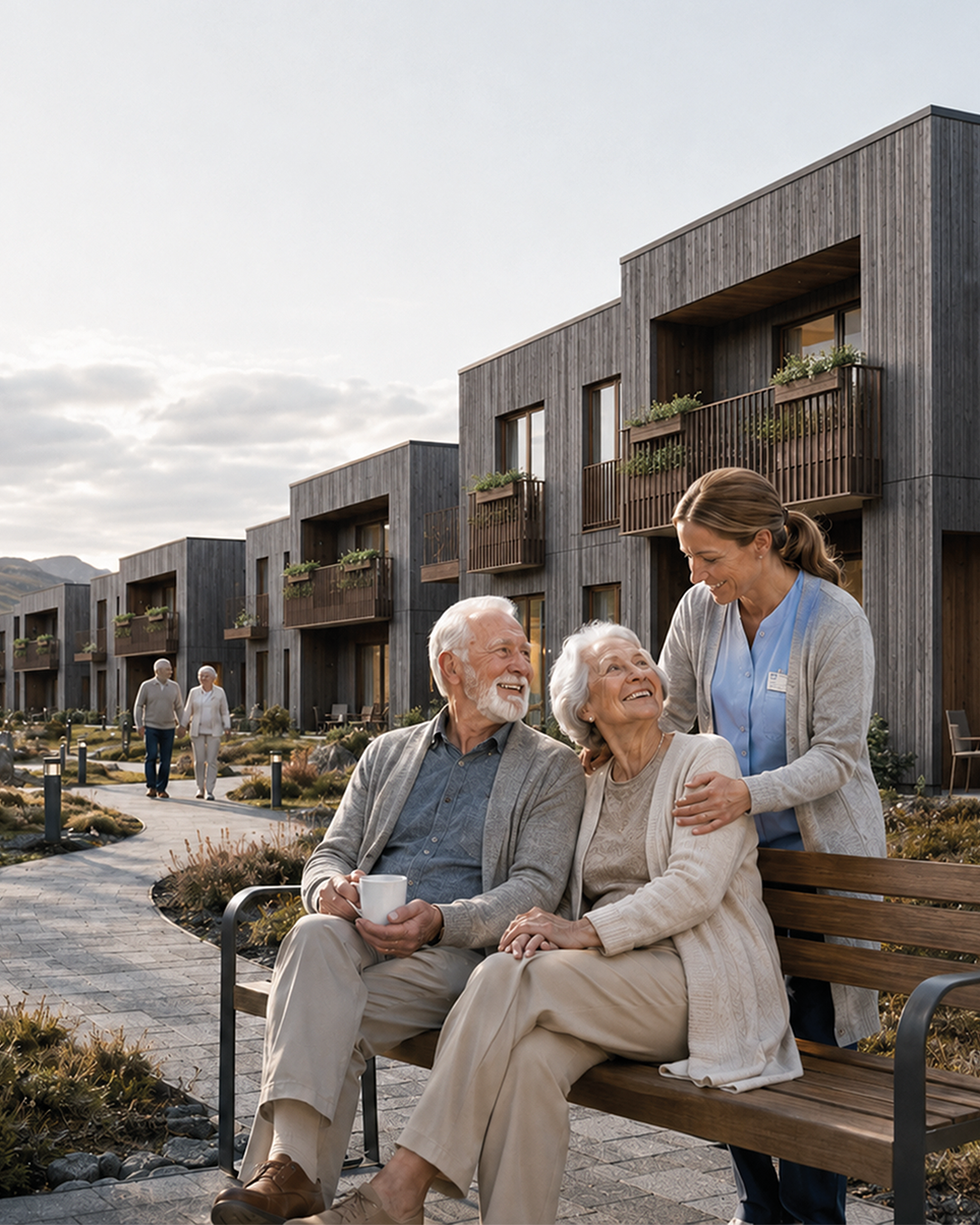
Europe’s ageing population is not a new investment thesis. The demographic direction has been clear for years. What is becoming more important for real estate investors and developers is the growing mismatch between that predictable demand and the market’s ability to deliver the buildings required to serve it.
Senior housing, assisted living and care homes sit in an unusual position within the European living sector. Demand can be forecast with far greater confidence than in many other real estate segments, yet supply remains constrained across multiple markets. The challenge is finding a delivery model capable of meeting it.
This is the Silver Head Problem: Europe knows where demand is heading, but it is still not building enough appropriate senior housing to keep pace.
The broader living sector has attracted significant institutional capital over the past decade, but its individual segments are beginning to diverge. Short-term rental is facing greater regulatory intervention in major European cities, while student accommodation has matured into an increasingly competitive market, with development costs and affordability putting pressure on returns. - said Agata Augustynek, Business Development Director AT UCUBER
Senior housing has a different demand profile. Its growth is primarily demographic rather than cyclical. Across Germany, Austria and the Nordic markets, the share of older people is increasing, while the oldest age groups are growing particularly quickly. At the same time, many countries are already dealing with ageing care-home stock, limited new development and increasing pressure on existing facilities.
The demand is already locked in
Germany has one of the oldest populations in the EU, with roughly 22–23% already over 65, a share Eurostat expects to approach a third by 2050. The number of Germans needing long-term care is expected to rise from about 5.0 million in 2021 to 6.8 million by 2055, yet on current build rates, a widely cited study commissioned by Cureus and analysed by bulwiengesa warns of a shortfall of around 168,000 care places by 2040.
Austria is still growing, but almost entirely at the top of the age pyramid. The over-65 share is expected to climb from about 20% today to one in four by 2040, the 85-plus cohort will more than double by 2050, and long-term care needs are on course to roughly double by 2070, creating pressure that the OECD says the current system cannot absorb.
The Nordics combine fast-growing older populations with an acute delivery squeeze.
Finland has aged more sharply than anywhere in the developed world except Japan, adding some 430,000 older residents between 2010 and 2024. Its 85-plus population is expected to roughly double by 2045, even as formal care coverage has actually shrunk.
Sweden’s 80-plus population is growing by around half within a decade, from roughly 500,000 in 2017 to 750,000 by 2028, while about a third of municipalities already report shortages of residential care places.
Denmark will add close to 200,000 people over 65 within ten years, comparable to the entire population of Odense, while its 80-plus share is expected to more than double by 2050.
Iceland looks like the outlier. At around 16% over 65, it is younger than the EU average, but it is ageing from a low base faster than almost anywhere else. Nursing home waiting lists are lengthening, while the climate makes delivery genuinely difficult. There, the constraint is not only cost, but the need for a building system capable of performing reliably in Arctic conditions.
The result is a market where the direction of demand is relatively easy to see, but the supply response is not. This distinction matters for investors. The future residents of senior housing developments already exist within today’s population. Their future need for appropriate housing and care infrastructure is not dependent on consumer sentiment or short-term economic growth. The uncertainty lies instead in whether new capacity can be delivered quickly enough, at the right cost and in the right locations.
Why modular construction works particularly well for senior housing
Senior housing has characteristics that make it particularly suitable for modular construction. Care homes and assisted living developments typically contain a high degree of repetition, with similar bedrooms, apartments, bathrooms, corridors and technical installations across the building.
This allows a significant part of the construction process to move from the site into a factory environment. Modules can be produced while foundation and infrastructure works continue on site, allowing two major parts of the programme to run in parallel.
At UCUBER, depending on the project, up to 90% of construction work can be completed off-site, while the overall delivery programme can be shortened by up to 60% compared with conventional construction.
That number matters because every month saved at the construction stage can potentially move revenue forward.
Speed gets the attention. Predictability may be more valuable
The headline benefit of modular construction is often speed but for an investor, certainty may be just as important. Traditional projects carry a long list of variables. Labour availability changes. Subcontractors change. Site conditions create surprises. Programmes extend. Budgets move.
The longer a project stays exposed to these variables, the harder it becomes to protect the assumptions on which the investment was originally approved. Moving production into a factory does not eliminate development risk, but it changes where that risk sits. Materials, labour, production sequencing and quality checks can be planned before manufacturing starts. The process can then be repeated across large numbers of modules rather than reinvented room by room on site.
Depending on specification and market conditions, UCUBER’s modular construction model can reduce total project costs by approximately 10–15%. But the bigger advantage may be that the investor has a clearer picture of what is being delivered, when it will arrive and how much of the process remains exposed to uncertainty.
At UCUBER, modules move through defined production stages, with quality checks carried out throughout the process. Structure, installations, bathrooms, finishes and other components can be inspected before the module is transported to site.
The benefit is the ability to repeat that quality across an entire building.
When investors talk about modular construction purely in terms of construction cost, they can therefore miss part of the picture. The real calculation includes time, usable area, financing exposure and operational start date.
Designed around the way care facilities actually operate
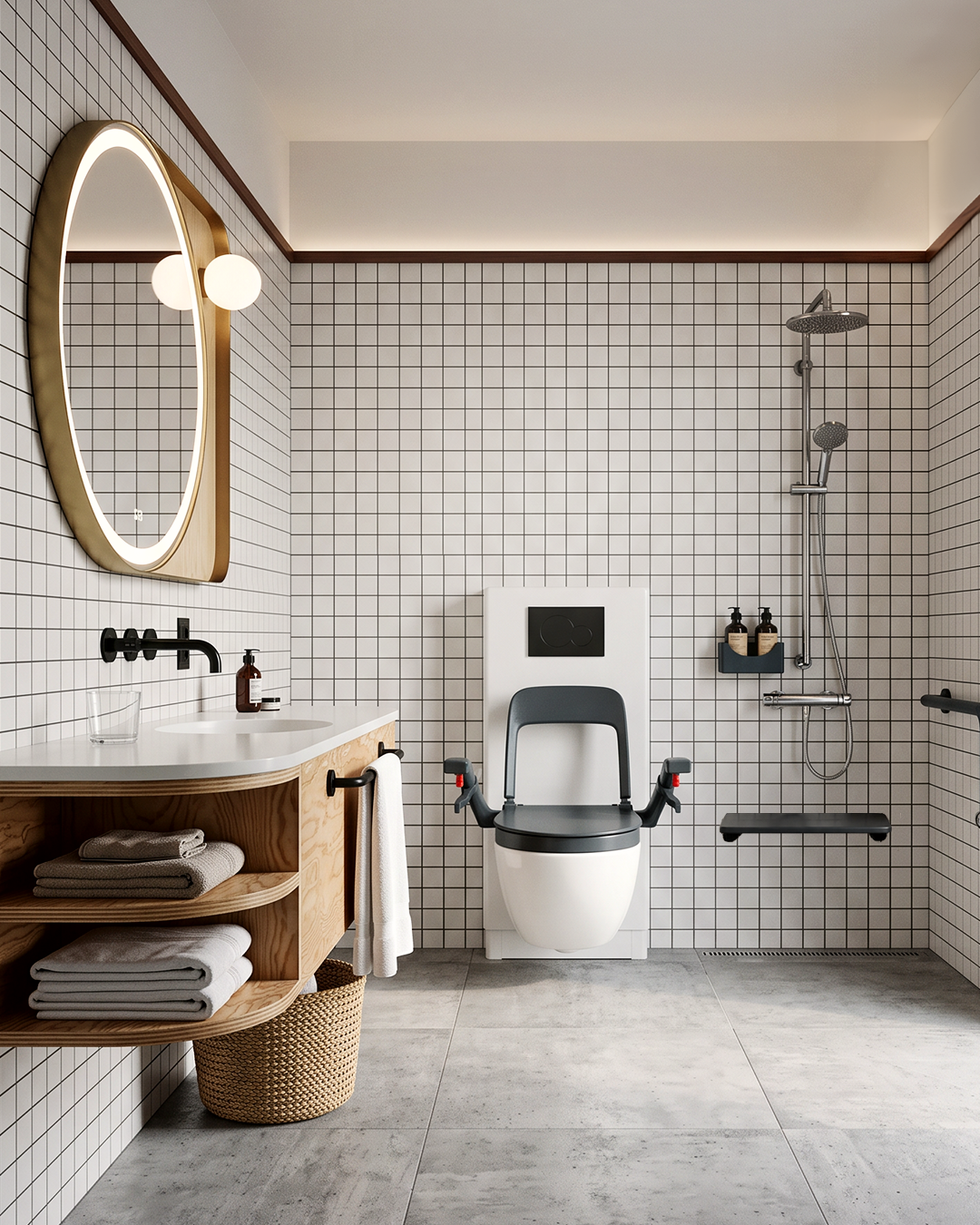
Ucuber works with specialised suppliers to integrate the solutions required in modern care environments, including adjustable care beds, accessible and assisted bathrooms, ceiling track hoists, passenger and bed lifts, handrails, mobility-support solutions and other specialist equipment. These elements can be coordinated with the modular design before production begins, reducing the number of interfaces that need to be resolved later on site.
.png)
Layouts can also be developed around the operational requirements of the target market. For UK care projects, this includes planning principles that support CQC expectations, such as accessible circulation, appropriate resident-room and bathroom arrangements, staff workflows and safe movement through the building. For projects in other European markets, the same approach can be adapted to local regulations, operator standards and care models.
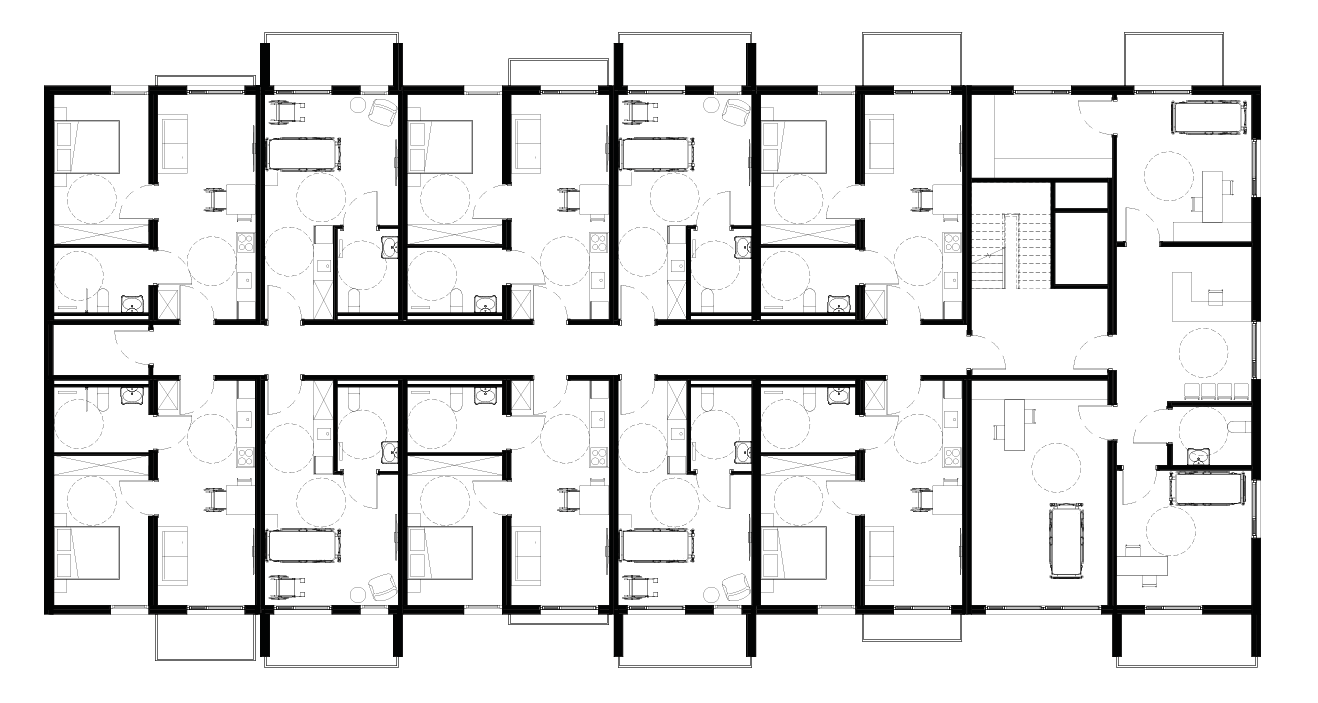
The result is a modular building that is not simply delivered faster, but is designed from the beginning as a functioning care environment. By coordinating architecture, modular production and specialist care equipment within one process, more of the operational complexity can be resolved before the modules ever reach the site.
Whoever solves delivery solves the market
By moving a large proportion of construction off-site, running factory and site works in parallel and creating a repeatable production process, UCUBER helps shorten the route from investment decision to operating asset. The advantage is not simply faster construction. It is a more controlled development process, with greater visibility over time, cost and quality.
See how the system is built at ucuber.com/technology, or the commercial case at ucuber.com/for-investors. Demographic figures: Eurostat and national statistics offices.