technology
DURABLE. SAFE.
BUILD TO PERFORM IN ANY ENVIRONMENT.
Steel is the backbone of our modular buildings. It provides an unmatched level of structural strength and stability, forming a solid foundation for every module we create.
Our buildings combine exceptional durability with Arctic-level thermal insulation and effective acoustic protection, even in dense urban environments. Every project is engineered to meet the highest international standards for fire and structural safety - delivering lasting protection, everyday comfort, and peace of mind.
Hybrid is not a compromise.
It is a considered conclusion.
We don't force a single construction method. From the very first stage, beginning with feasibility analysis and concept development, we evaluate each project against four key criteria:
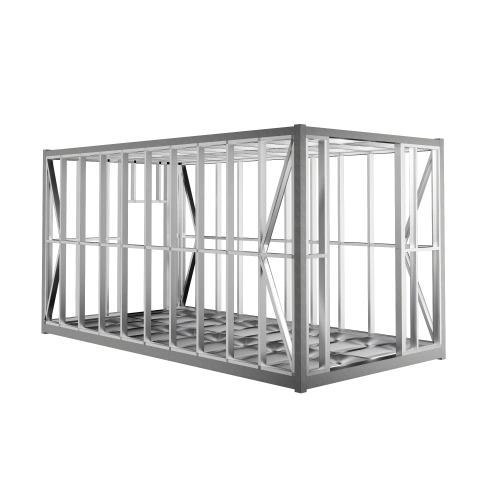
Lightweight, precise, and fast to deliver — steel is ideal where speed, flexibility, and structural efficiency matter most.
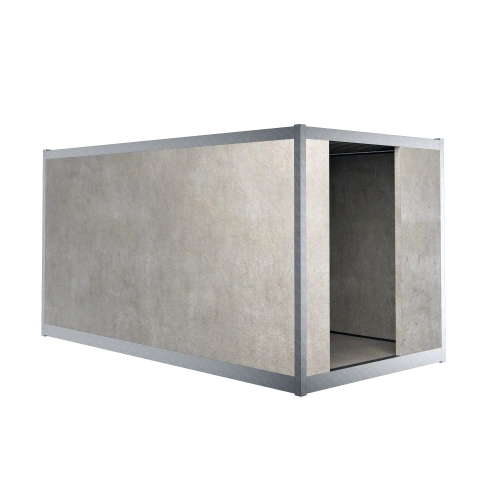
A hybrid of steel and concrete that combines fast assembly with strong fire resistance and acoustic performance
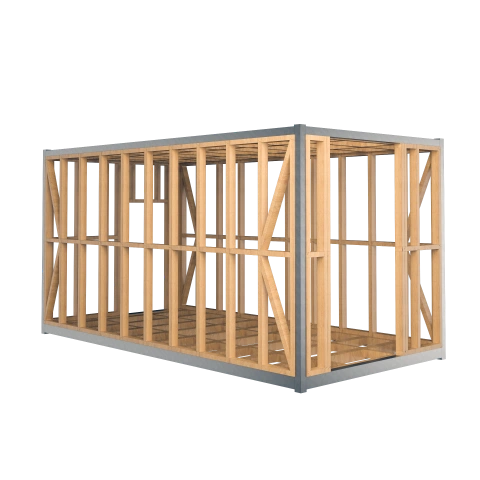
Steel structure with timber infill reduces embodied carbon while maintaining structural strength, precision, and durability.
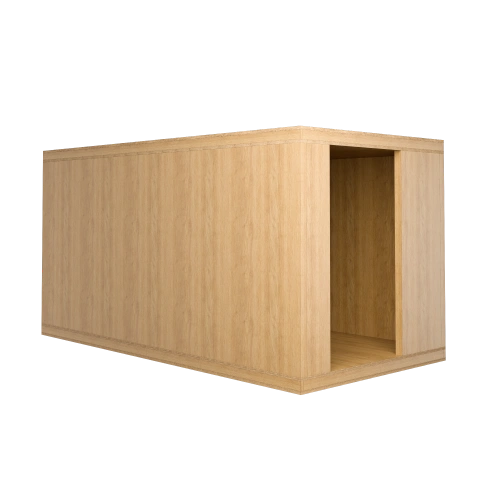
CLT modules are the right choice where carbon performance and environmental certification are key project drivers.
lower carbon footprint
environmental certification
Time is money.
A timeline is not a wish.
It is a commitment.
In traditional construction, the schedule is often treated as an estimate. It is influenced by weather, labour availability, supplier lead times and a range of other variables that are difficult to fully control.
In modular construction, the schedule becomes a defined project parameter, established before work on site begins and maintained through a production process carried out in a factory environment.
The key difference lies in parallel execution.
As foundation works begin on site, module production is already underway off-site. By replacing a sequential build process with parallel delivery, the project gains speed, efficiency, and a far higher level of predictability.
*Enclosed shell means a building with completed facade, installed windows and doors, and sealed inter-module connections — ready for interior works.
Energy efficiency is designed from the start.
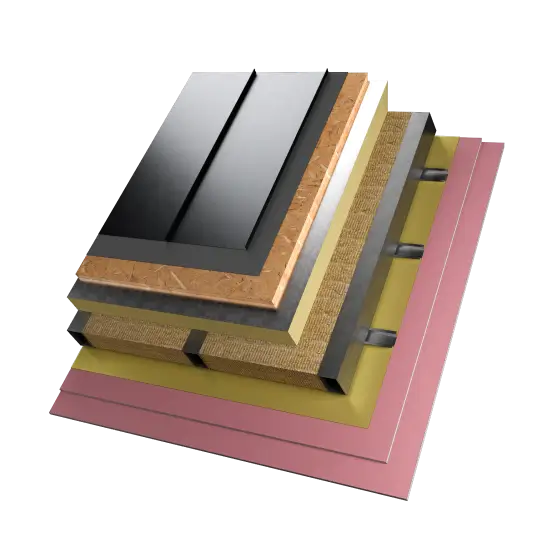
The technology doesn’t change. The layer configuration does.
The system meets the requirements of WT 2021 and can be adapted to local regulations, including KfW 40 and Passive House standards, depending on project requirements.
Energy-efficient systems such as heat pumps, photovoltaics, MVHR, underfloor heating and BMS can be integrated from the earliest design stage as part of the module itself.
Continuous insulation across the facade helps reduce thermal bridging and supports lower operating costs over the life of the building. No improvisation on site. No accidental thermal bridges.
Precision that doesn’t change regardless of project scale.
In a controlled factory environment, quality is verified against clearly defined standards throughout production. Dimensions, finishes and installations are checked at every stage, while a dedicated quality control team ensures consistency, compliance and precision across the entire development.
Digital quality control.
The project is developed in BIM and supported by a digitally documented quality assurance process from production through to delivery. Before leaving the factory, all modules undergo final inspection, and the full technical record is compiled for handover. This gives the investor complete, structured documentation for the building, organised module by module.
This level of accuracy reduces the need for on-site correction. Components fit as intended, services align properly and facade surfaces remain consistent.
Silence is a matter of material physics - not thickness.
Acoustic comfort - up to 60% noise reduction compared to traditional timber-frame construction.
In steel modules, acoustic insulation is not a matter of finishing. It is the result of a designed layer assembly - from the core of light-gauge steel profiles, through mineral wool filling every cavity, to sheathing on both sides of the partition.
In hybrid variants with concrete elements, we achieve acoustic performance previously reserved for monolithic construction.
Built to resist.
Certified to prove it.
Fire resistance is not an option. It is the foundation of the investment.
Structural fire resistance is not a technical parameter for the designer. It is a legal requirement, an insurance condition, and a due diligence argument for every institutional investor.
The system’s foundation is consistent across all markets — a load-bearing steel frame and non-combustible mineral wool of Class A1. The partition configuration is adapted to local regulations: European standard EN 13501, or American standards IBC and ASTM E119.
What we achieve:
Sealed at the Core
Engineered to Endure.
Durability is not a promise.
It comes from a system designed to protect at every layer.
In modular construction, steel is enclosed within a building systempurpose-builtto prevent direct exposure to moisture and air.
Corrosion protection classes:
The right structural choice changes the carbon equation.
By combining production efficiency, minimal waste, and materials designed for recovery and recycling, steel modular construction can reduce embodied carbon by up to 40–45% versus conventional building methods.
Hybrid module steel + timber~51-56% lower embodied carbon
Near-zero embodied carbon, with carbon-negative potential when biogenic carbon storage is accounted for
MOST FREQUENTLY CHOSEN TECHNICAL SOLUTIONS
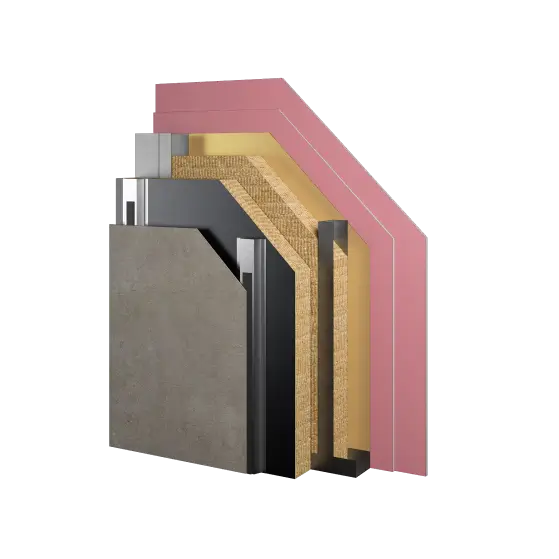
ventilated facade
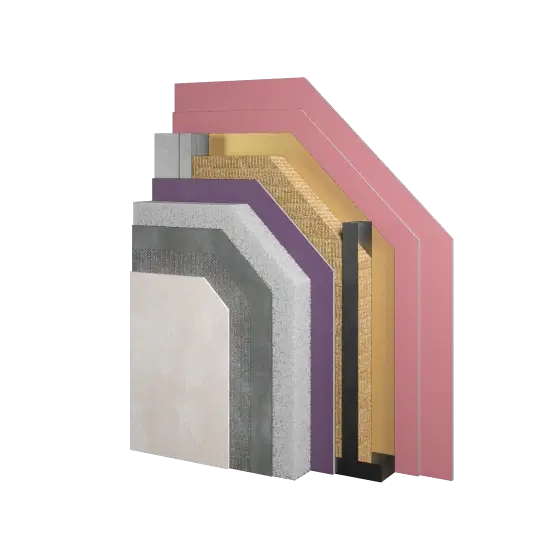
ETICS system
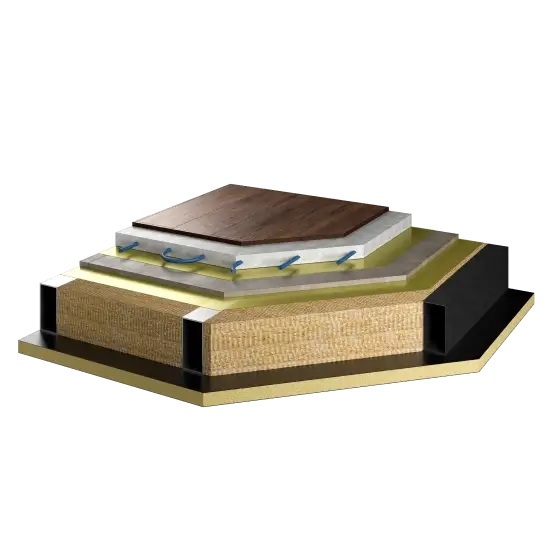
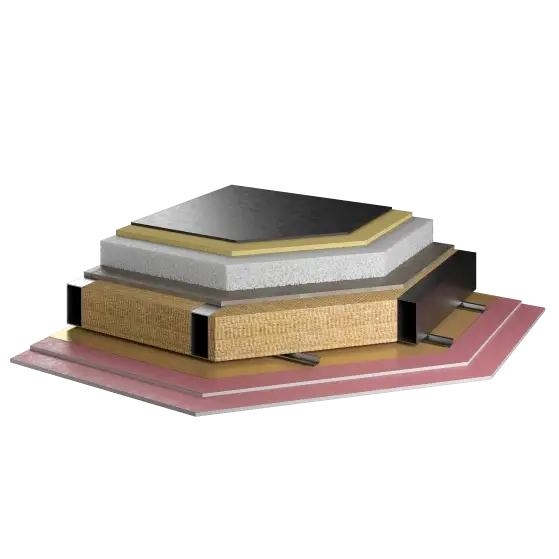
ventilated facade
ETICS system
ventilated facade
ETICS system
Design is modular Stand out with future-ready technology.
We invite architects and design studios who want to move beyond conventional building logic and design with greater speed, precision and flexibility. UCUBER technology it's a system that expands what can be delivered and how competitively it can be brought to market.
Join the Ucuber Architect Network!
Fill out the form and receive the invite to our community in your email inbox.
.webp)
Discover the technology behind our modular solutions
Fill a form and recived technical guide.
Fill out the form and receive the technical guide in your email inbox.